Shopping cart
You have no items in your shopping cart.



What if the most crucial element of your bathroom sanctuary isn't the bespoke vanity or the rain shower, but the unseen shield protecting it all? It's easy to get lost in the vision of sleek lines and flawless finishes. We understand that the technical details can feel daunting, especially with concerns over leaks affecting neighbours, HDB's 3-year BTO hacking rule, and the mandatory flood tests. The anxiety is real.
This is where peace of mind begins. Our essential hdb bathroom waterproofing guide is crafted to demystify the process, transforming confusion into confidence. We promise to equip you with the knowledge to ensure your personal retreat remains a serene, leak-free haven for years to come. In the following sections, we'll explore the critical regulations and technical standards required to protect your investment in timeless elegance.
Your bathroom is a personal sanctuary. A space for quiet reflection and daily renewal. Beneath the elegant tiles and flawless finishes lies an unseen guardian: the waterproofing membrane. Think of it as the internal skin of your retreat, a seamless barrier meticulously designed to contain water and protect the very structure of your home.
In the high-rise landscape of Singapore, this invisible layer is not a luxury; it's a necessity. Your floor is your neighbour's ceiling. This shared structure makes effective waterproofing a matter of community harmony. To prevent disruptive inter-floor leaks, the Housing & Development Board (HDB) enforces stringent standards, often requiring contractors for new BTO flats to provide a warranty period of up to 5 years against ceiling leaks. This commitment underscores a simple truth: the structural integrity of the building is directly linked to the serenity within your home. A failure here doesn't just cause water damage; it disrupts peace.
At its core, waterproofing creates a continuous, impermeable barrier over a surface before the final tiles are laid. This process is fundamental to modern construction. For a deeper technical dive into the building science, Wikipedia’s article on what is waterproofing? provides a comprehensive overview. Understanding this foundation is the first step in our complete hdb bathroom waterproofing guide.

An illustration of the crucial layers protecting your sanctuary.
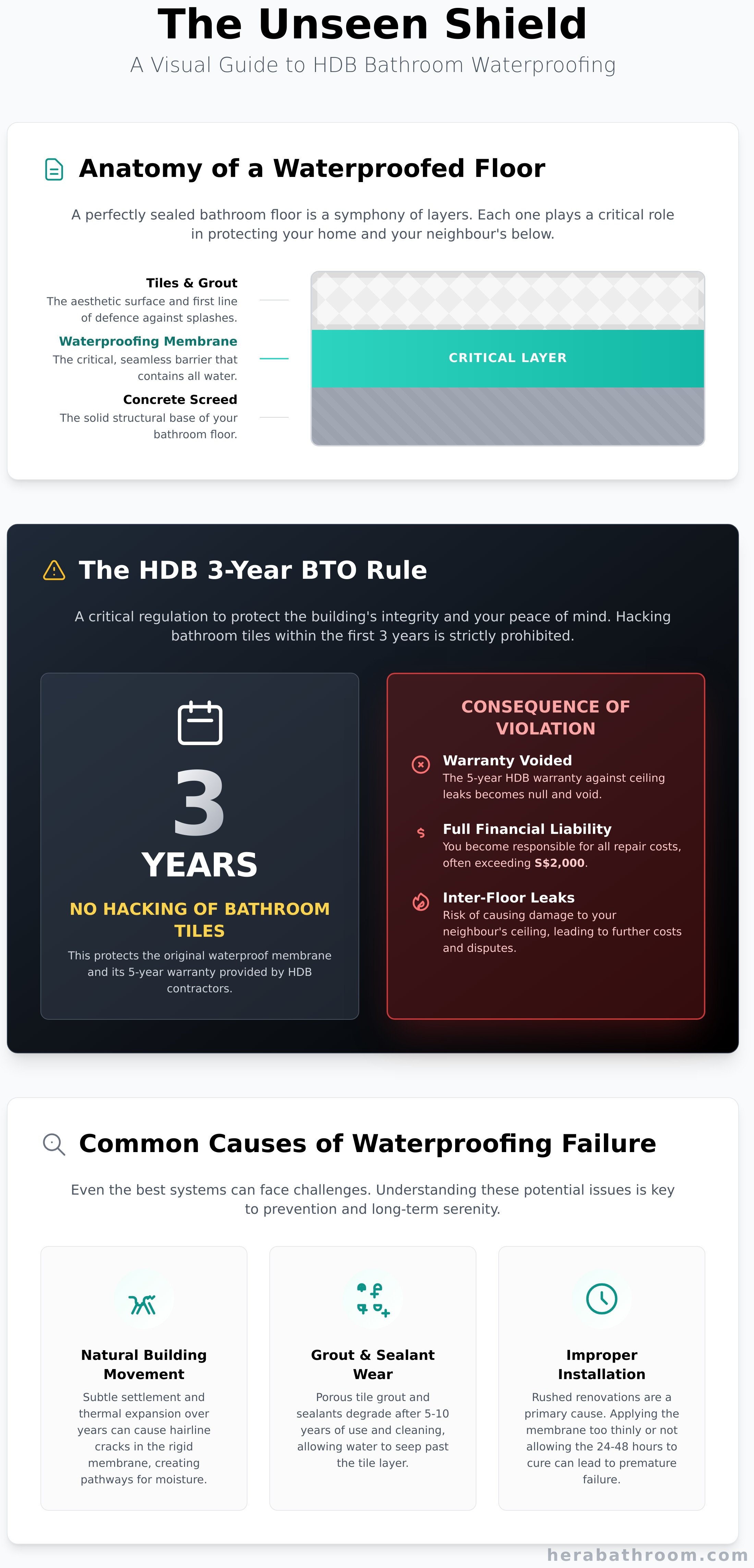
A perfectly waterproofed floor is a symphony of layers working in concert. It begins with the concrete screed, the solid base of your retreat. Applied over this is the critical waterproofing membrane. Modern HDB projects almost exclusively use liquid-applied polymer-modified cementitious coatings. Unlike older sheet membranes, this liquid form is painted on, creating a seamless, monolithic layer that perfectly covers difficult corners and pipe protrusions. Finally, the tile layer you see is installed, offering aesthetic beauty and the first line of functional protection.
Even the most meticulously crafted spaces can face challenges over time. The serene surface of your bathroom can hide underlying issues that develop slowly. Understanding these potential points of failure is key to prevention and timely repair.
Crafting your bathroom sanctuary begins with understanding the foundations. In Singapore, all HDB renovations are governed by a clear set of rules designed to protect the structural integrity of the building and ensure harmony between neighbours. These regulations are not limitations; they are the framework for creating a space of lasting quality and serenity.
For owners of new Build-To-Order (BTO) flats, the most critical regulation is the 3-year restriction on hacking bathroom tiles. From the date of the block's completion, you are not permitted to remove or hack any existing bathroom floor or wall tiles. This rule is in place for one vital reason: to protect the original waterproof membrane laid by HDB’s appointed contractors. This protective layer is the first line of defence against water seepage and is covered by a 5-year warranty against leaks.
Disturbing this membrane prematurely voids the warranty. Should a leak occur, the homeowner becomes fully responsible for all rectification costs, which can easily exceed S$2,000 for repairs to your own unit and any damage to your neighbour’s ceiling below. This protection is a core component of the official HDB renovation guidelines, which mandate specific standards to prevent such issues.
However, this doesn't mean your design vision must wait. The elegant alternative is ‘overlaying,’ where new tiles are installed directly on top of the existing ones. This method allows you to completely transform the aesthetic of your space without compromising its foundational waterproofing. Once the structural work is approved and complete, you can begin the journey of selecting fixtures that define your personal retreat. Explore our curated collections to find inspiration for a space that blends timeless elegance with flawless function.
The landscape changes for owners of resale flats older than three years. Here, you have the freedom to fully reimagine your bathroom, which often involves hacking the old tiles and redoing the waterproofing from scratch. This process is essential for older flats, as waterproofing membranes can degrade after 10 to 15 years.
For flats undergoing the Home Improvement Programme (HIP), HDB will typically make the replacement of the waterproof membrane and tiles mandatory if there are signs of leaks. This presents a perfect opportunity to create a truly bespoke space. While the core waterproofing is handled, you can opt out of the standard HDB fittings to install your own choice of tiles and fixtures.
Regardless of your flat's age, any renovation involving hacking and waterproofing requires two non-negotiable elements:
Engaging a licensed professional ensures your renovation is not only beautiful but also built to last, preserving the tranquility of your home for years to come.
The final step in crafting your bathroom sanctuary is a moment of truth. Before you can fully embrace the serenity of your new space, it must pass the mandatory HDB water ponding test. Often called a 'flood test', this procedure is a non-negotiable requirement for all HDB flats after bathroom renovation works that involve floor tiles. Its purpose is simple yet profound: to provide absolute assurance that the new waterproofing membrane is flawless, protecting your home and maintaining harmony with your neighbours below.
This isn't merely a formality. It's the final quality check that stands between a successful renovation and future complications. The test follows precise technical parameters set by HDB: the entire bathroom floor must be submerged under 25mm of water for a continuous period of 4 hours. This simulates the most demanding conditions, ensuring your waterproofing is impeccably installed.
The process is a meticulous one, orchestrated by your contractor and witnessed by an HDB officer. First, all floor traps are temporarily sealed to be watertight. A low barrier, typically made of sandbags or a temporary sealant dam, is created at the bathroom entrance to contain the water. The space is then carefully filled to the required 25mm depth. For the next 4 hours, the water sits, testing every millimetre of the membrane. The critical observation happens below, where your neighbour's ceiling is monitored for any signs of dampness, water stains, or seepage.
Visual guide to the HDB water ponding test procedure.
A successful test is marked by a completely dry ceiling downstairs. This is the green light you need, a confirmation of superior craftsmanship. If the test fails, however, it signifies a breach in the waterproofing. Your contractor is required to locate the source of the leak, hack the necessary tiles, rectify the membrane, and re-tile the area. The entire water ponding test must then be conducted again, a process that can delay your project completion by several days.
Passing the test requires precision at every stage of the waterproofing and tiling process. Failures almost always stem from a few common oversights, which a professional team will know to avoid. Understanding these pitfalls is a key part of this hdb bathroom waterproofing guide.
A truly serene bathroom is one where beauty and peace of mind coexist. Effective waterproofing is the invisible foundation of this harmony, but your design choices are what bring the sanctuary to life. Selecting the right fittings and finishes isn't just about aesthetics; it's about creating a cohesive system where every element supports the longevity of your space. This is where functional protection evolves into timeless elegance, transforming a standard HDB unit into a personal, spa-like retreat.
The dream of a bathtub in an HDB bathroom is entirely achievable with thoughtful planning. The key is ensuring your design choice complements, rather than complicates, your waterproofing membrane. Proper installation requires a slightly sloped floor beneath the tub, directing any potential condensation or overflow towards the floor trap and preventing stagnant water. This is why freestanding tubs are an inspired choice for compact spaces. Their elevated design allows for easy cleaning and, crucially, visual access to the floor, ensuring the integrity of your waterproofing is never hidden from view. The curated HERA Bathtub Collection features minimalist designs crafted to fit harmoniously within HDB dimensions without sacrificing an ounce of luxury. A beautifully sculpted bathtub becomes the heart of the room, grounding the space with an energy of calm and restorative luxury.
Your vanity cabinet is often the first place to show signs of moisture damage. Protect your investment by choosing form that follows function. Wall-hung vanities are the superior choice for a waterproofed bathroom. They create an illusion of a larger, more open space while keeping the entire floor visible and accessible. This design allows moisture to evaporate easily and makes cleaning effortless, preventing the build-up of mould. Beyond the cabinet itself, seal the 'splash zone' behind your basin and mirror with a high-quality silicone sealant. This simple step prevents water from seeping into the wall cavity. Discover HERA Vanity Cabinets, engineered with high-density, moisture-resistant materials specifically to withstand Singapore's persistent humidity and provide lasting elegance.
While the waterproofing membrane is your bathroom's ultimate safeguard, your tiles and grout are the visible front line. Their quality is paramount. Opt for non-porous tiles like porcelain, which has a water absorption rate of less than 0.5%, making it nearly impervious to water. This prevents the tile body from holding moisture that can lead to mould growth. Equally important is the grout that binds them. While standard cement-based grout is porous and prone to cracking, epoxy grout is a modern essential. It's a non-porous, chemically resistant resin that creates a 100% waterproof seal between tiles. It doesn't stain, shrink, or crack, ensuring a flawless and protective finish for years. Following this advice is a cornerstone of any reliable hdb bathroom waterproofing guide. You can visualize how these materials create a harmonious aesthetic in our HERA Brochures & Gallery.
By thoughtfully selecting each element, from the tub to the tiles, you create a space that is not only beautiful but built to last. Begin crafting your personal, protected retreat by exploring the curated collections at HERA Bathroom.
Your personal sanctuary is complete. The tiles are set, the fittings gleam, and a sense of calm pervades the space. The final step in ensuring this tranquility endures is mindful maintenance. Proper waterproofing is not a one-time event; it's a commitment to preserving the harmony of your HDB bathroom. Simple, consistent habits are the key to protecting your investment and ensuring your retreat remains a leak-free haven for years to come.
Daily care can dramatically extend the life of your waterproofing system. These are not chores, but simple rituals to maintain balance.
Over time, even the best materials require attention. Grout and silicone are your bathroom's first line of defense against water intrusion. We recommend inspecting silicone seals around your basin, bathtub, and toilet annually. Plan to have them professionally replaced every 3-5 years, or as soon as you notice any cracking or peeling. A full regrouting may be necessary every 5-10 years, depending on usage. This proactive maintenance is a cornerstone of our hdb bathroom waterproofing guide, ensuring the membrane beneath remains untouched.
Vigilance is your best tool for early detection. Acting on these signs immediately can prevent minor issues from becoming costly repairs affecting your home and potentially your neighbours below.
Your journey toward a lasting personal oasis doesn't end once the renovation is complete. HERA is your partner in preserving that serenity. Our commitment is crafted for life, offering you continued support and confidence.
Your journey to a tranquil bathroom retreat begins with a solid foundation. This hdb bathroom waterproofing guide has shown that understanding key regulations, like the 3-year BTO rule, and properly conducting the mandatory water ponding test are non-negotiable first steps. These technical details are the silent guardians of your serenity, ensuring your space remains a protected haven free from the worries of water damage for years to come.
Once the foundation is secure, the art of design can flourish. At HERA Bathroom, we create fittings specifically for HDB and BTO spaces, earning the trust of Singaporean homeowners with our blend of timeless elegance and durability. Find inspiration and expert guidance for your renovation at our MacPherson Concept Store. Begin your journey to a serene sanctuary-explore the HERA collection today. Your personal retreat is within reach.
No, it isn't mandatory to waterproof walls to the ceiling. HDB guidelines require waterproofing to extend at least 150mm up the wall, and 300mm within shower areas. However, for complete peace of mind, full-height waterproofing is the superior choice. It offers maximum protection against moisture and mould growth, preserving the serene, pristine condition of your personal sanctuary for years to come.
You cannot install a bathtub in a new BTO flat within the initial three-year restriction period. HDB prohibits any hacking or alteration of bathroom floors and walls during this time to protect the integrity of the original waterproofing membrane. This regulation is essential to prevent water leakage issues that could affect the unit below. After three years, you may proceed with the necessary permits.
You should contact your HDB Branch Office immediately to report the issue. They will facilitate a joint inspection with your neighbour to investigate the source of the leak. Under the Home Care programme, HDB often co-shares the cost of repairs for leaks caused by general wear and tear. Addressing the problem swiftly is key to restoring harmony and preventing further damage to either home.
A professional HDB waterproofing treatment in 2026 is projected to cost between S$800 and S$2,500. A less invasive method like polyurethane (PU) injection grouting typically ranges from S$800 to S$1,200. A more comprehensive solution, which involves hacking existing tiles to reapply the membrane, can cost S$1,500 to S$2,500 or more, depending on the bathroom's size and the finishes you choose.
A well-installed waterproofing membrane in an HDB flat should last for 10 to 15 years. The longevity depends heavily on the quality of the initial application and the materials used. As part of this HDB bathroom waterproofing guide, we advise a professional inspection if your flat is over 10 years old. This proactive check ensures your bathroom remains a flawless, leak-free retreat.
Yes, an HDB permit is required before you can change your bathroom floor tiles. The process involves hacking the floor, which compromises the original waterproof layer. To ensure this critical barrier is correctly re-installed, HDB requires that you engage one of their registered contractors. This protects the structural integrity of the building and prevents potential inter-floor leaks.
DIY sealants are only a temporary solution for minor surface issues, such as sealing a fine crack in grout. They cannot fix a problem with the underlying waterproofing membrane, which is the true barrier against leaks. Relying on these products can mask a more serious issue. For a lasting and reliable repair that protects your space, a professional assessment is always the most elegant solution.
Hacking involves completely removing the existing tiles and screed to apply a new waterproofing membrane directly onto the concrete slab. Overlaying, in contrast, means installing new tiles directly on top of the old ones. Hacking is the most effective and HDB-approved method for bathrooms, as it ensures a perfect, seamless seal. Overlaying is not recommended as it fails to address the state of the original, aging membrane.