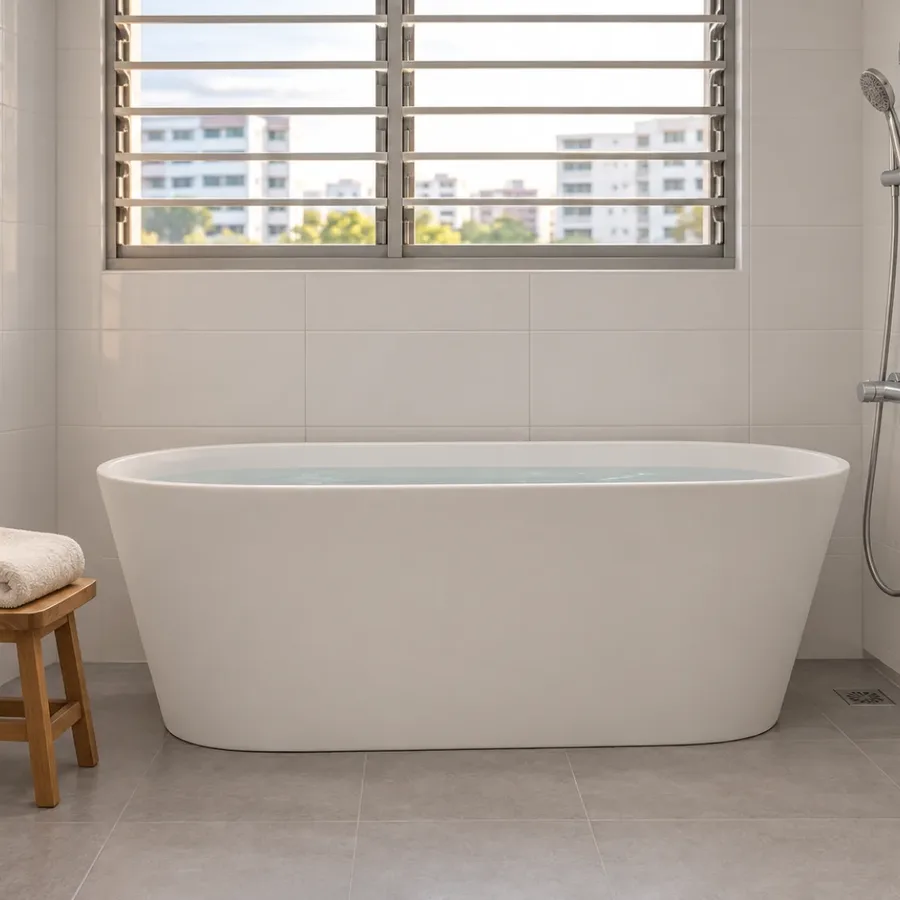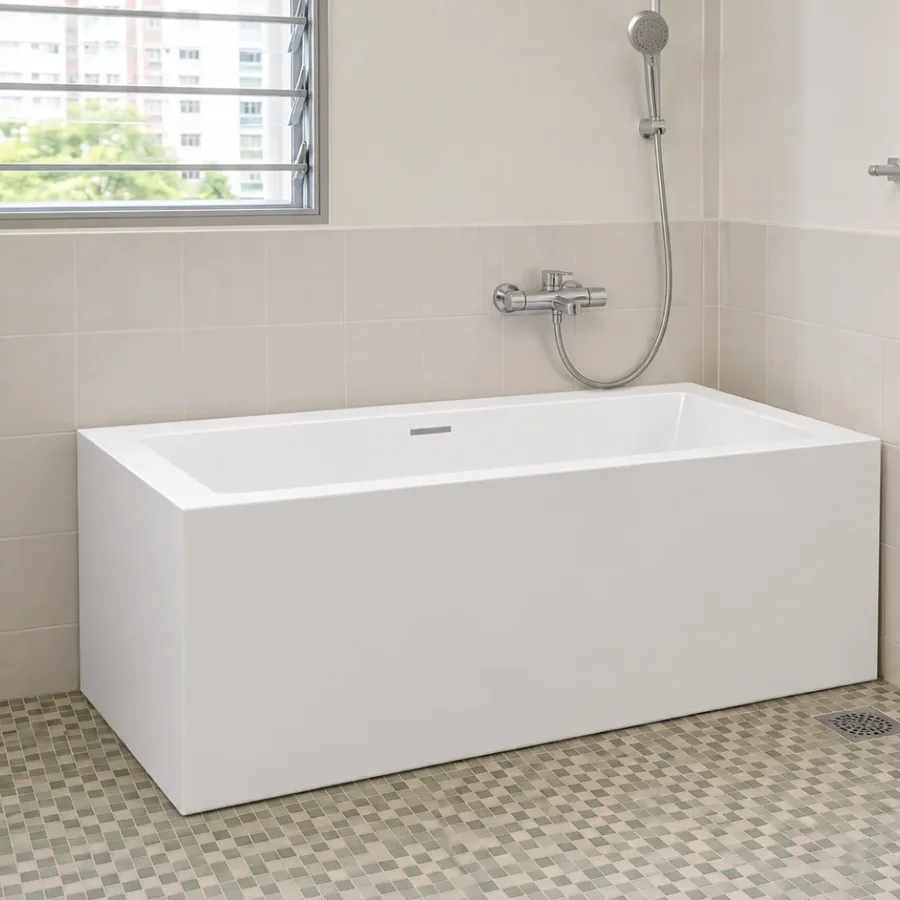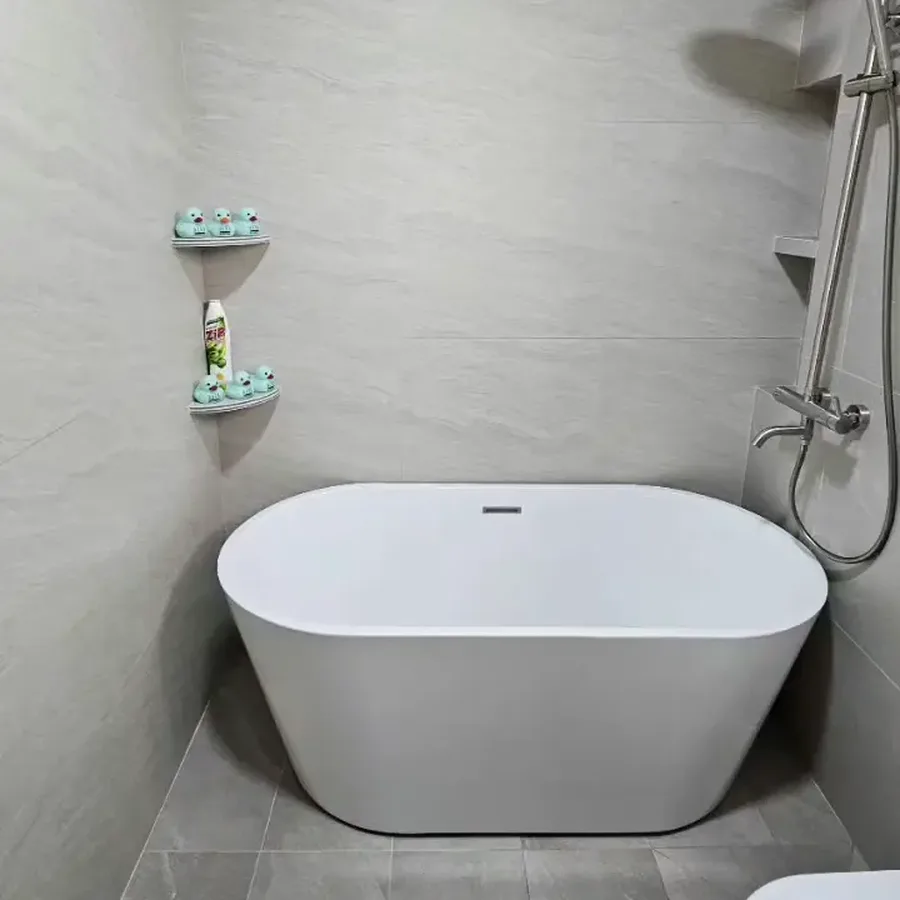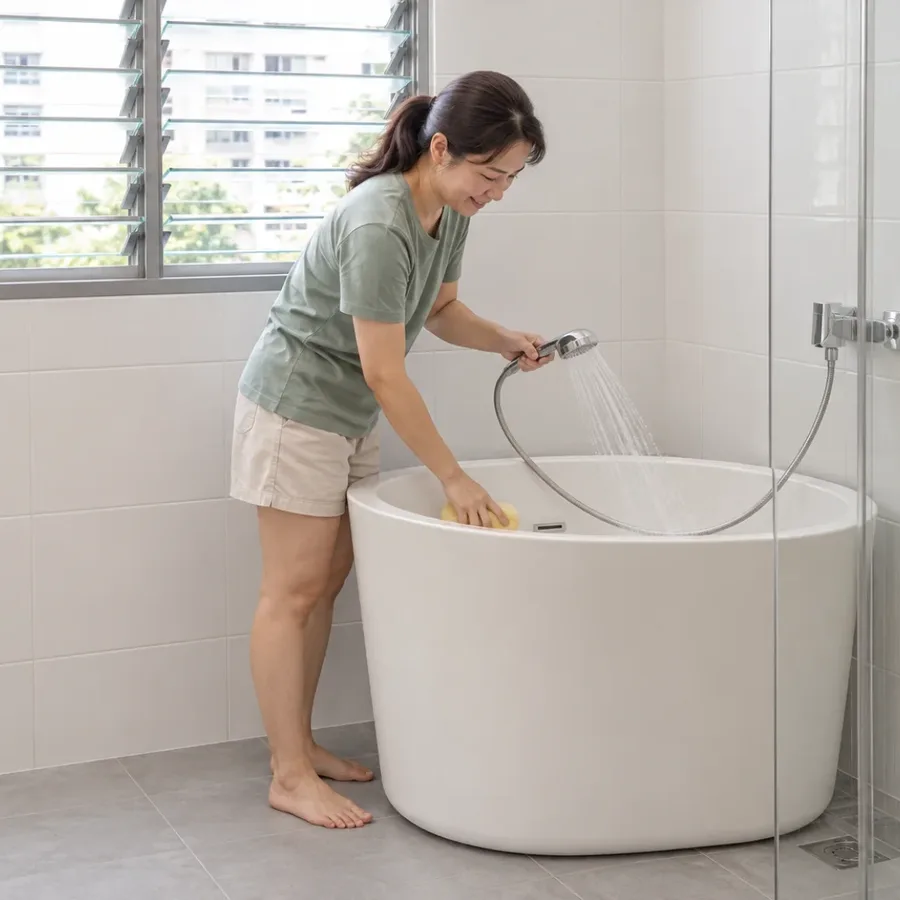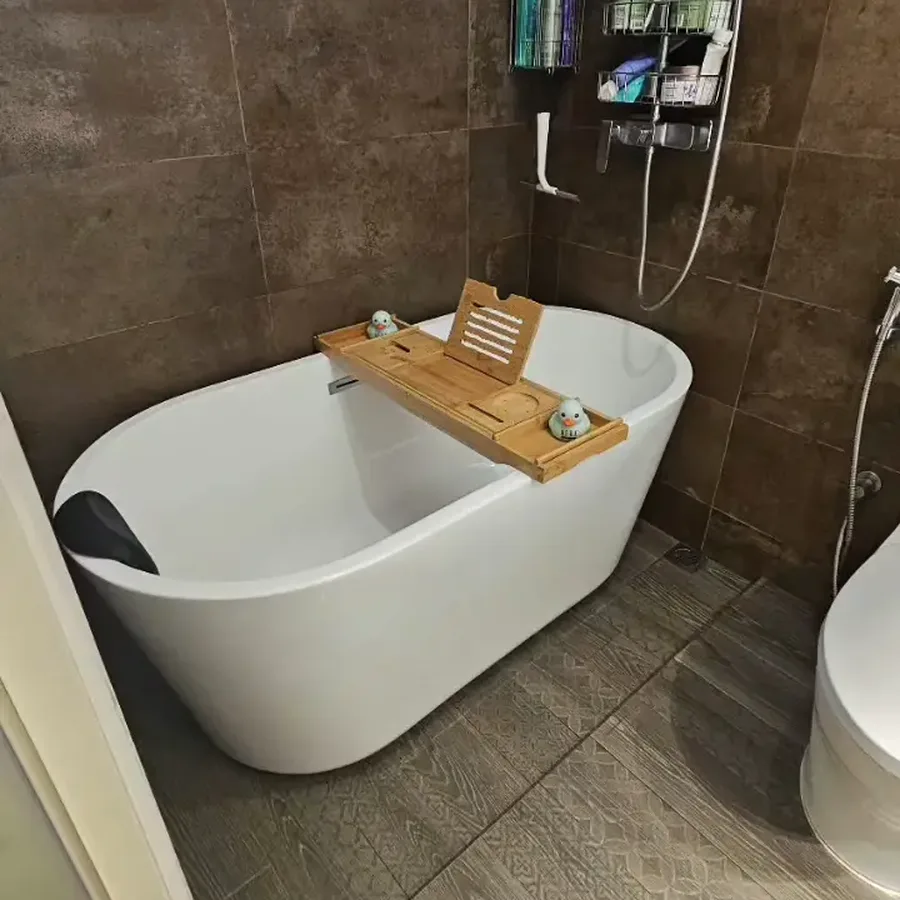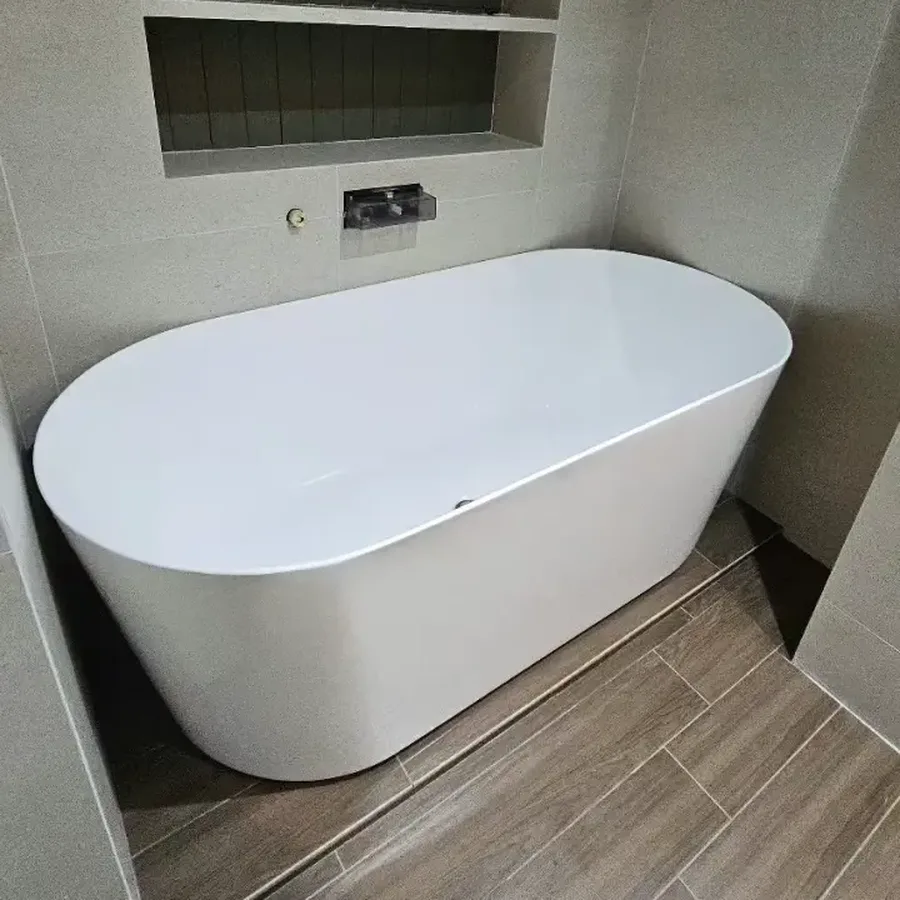
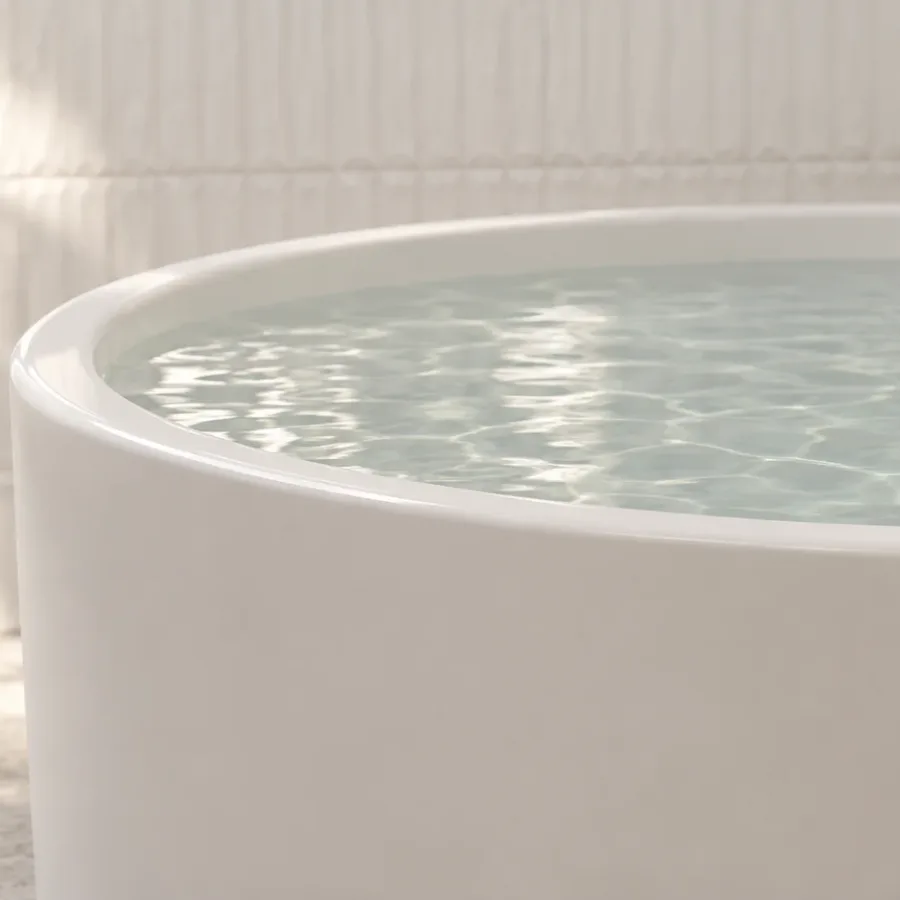
For most Singapore flats the best bathtub material is acrylic. It weighs about a third as much as stone resin or cast iron, so two people carry it in, and it feels warm from the first touch.
Six bathtub materials at a glance
People ask us about six materials. We sell one of them, so for the other five we use makers' published numbers, or say "heavier" and "costlier" where no reliable number exists.
| Material | Empty weight (example) | Getting it in | Feel | Price vs acrylic |
|---|---|---|---|---|
| Acrylic with fibreglass (every HERA tub) | 30 to 65kg across our range; 38 to 45kg at 1,700mm | Two people, through the lift and door | Warm to the touch | $1,188 to $2,988 at HERA |
| Stone resin or solid surface | 104 to 140kg at 1,700mm | A crew, with the route planned | Warm, heavy, matte | Costlier |
| Enamelled cast iron | 143kg at 1,524mm | A crew, with the route planned | Cold until the water warms it | Costlier |
| Enamelled steel | 25kg at 1,700mm | Light, but usually built in with a panel | Cold and thin-walled | Varies by brand |
| Wood (hinoki and similar) | Varies widely by wood and size | Depends on the build | Warm, scented | Costlier |
| Foldable plastic (PVC or fabric) | Light enough for one person | Easy | Thin, soft-sided | Much cheaper |
Sources: HERA weights and prices from our catalogue, November 2026. Stone resin and solid surface: Stonebaths G65189 data sheet (125kg net) and G6599 data sheet (140kg net), and the polymarble Grace ST39 data sheet (104kg net). Cast iron: Kohler Villager K-715 spec sheet (316 lb, 143.3kg, 60 inches long). Enamelled steel: Laufen Milano data sheet (25kg net, 1,700 x 700mm). Wood and plastic tub prices and weights vary too much to quote one number.
The comparison leaves out fibreglass on its own. In ours, fibreglass is the layer that backs the acrylic and gives it strength.
How heavy each bathtub material is
Weight matters here for a practical reason: the tub has to come up in an HDB lift, along a corridor and through a bathroom door. Here are the empty weights from the spec sheets above, drawn to the same scale.
"Is the weight approved by HDB?" We get this question often. We do not quote floor limits; what we can tell you is the tub's empty weight and litres from the product page.
Our acrylic tubs are installed in HDB flats every week, in hundreds of BTO projects. If you are thinking about a heavy stone or cast iron tub, ask your contractor to check it for your flat.
Acrylic: what every HERA bathtub is made of
Each of our tubs is an acrylic shell with a fibreglass layer behind it, sitting on a stainless steel frame with adjustable legs. The acrylic gives the smooth, glossy surface you touch; the fibreglass and frame stop it from flexing.
What acrylic does well
Why we chose it for HDB flats
- Light: 30 to 65kg empty, carried in by two people
- Warm the moment you touch it
- Moulds into ovals, rounds and seats with no joints
- Smooth and non-porous, so it rinses clean
Where acrylic is weaker
What to watch for
- Scratches more easily than enamel if you scrub it
- Strong chemicals and bleach can dull the surface
- It can creak if it is not sitting level on its legs
- It feels lighter than stone, which some people dislike
Sizes and weights are on the product pages, for example the 1025 oval at 36.5 to 42.5kg, or the 1001 square at 45 to 65kg. You can also see all of them on our bathtubs page.
Acrylic vs stone resin: which should you pick?
Our plain answer: acrylic, for most homes in Singapore. Stone resin is a lovely material, but you pay for it in weight, price and delivery.
Stone resin and solid surface tubs are cast from crushed mineral and resin, so the colour runs all the way through. That gives the thick, matte, heavy look that photographs so well.
Acrylic
HERA's material
- 38 to 45kg for a 1,700mm tub (the wall-to-wall 1028 is the lightest)
- Two people carry it in
- $1,881 for a 1,700mm HERA tub
- Glossy finish, wipes clean
- Thinner walls; scratches if scrubbed
Stone resin or solid surface
Not sold by HERA
- 104 to 140kg for a 1,700mm tub
- Needs a crew and a planned route
- Costlier than acrylic of the same size
- Matte, solid, thick-rimmed look
Stone resin weights from the Stonebaths and Grace data sheets linked under the first comparison.
Pick acrylic if you live in a flat, want the tub in on one short visit, and want to keep the budget for the bathroom.
Pick stone resin if the look matters most, you have lift access and space to manoeuvre, and you have checked the delivery cost.
If what draws you to stone resin is the deep, square shape, our 1001 square tub gives a similar soak at 45 to 65kg.
Cast iron and enamelled steel
Both are metal tubs coated in a glass-hard enamel. They wear well, but they behave very differently from acrylic once they are in a Singapore flat.
Enamelled cast iron
The heavyweight: a 1,524mm Kohler Villager weighs 143kg empty. The enamel is very tough, but a chip needs a specialist touch-up, and getting it up a flat needs a crew.
Enamelled steel
Surprisingly light: a 1,700mm Laufen Milano is 25kg. Most are built-in shapes that need a frame and a panel, and a chip exposes the steel, which can rust in our humidity.
Wood and foldable plastic tubs
These two sit at opposite ends of the price range. People usually ask about them for a specific reason, so here is the short version.
Wood (hinoki and similar)
For the onsen feel
- Warm, soft to sit on, and scented
- Must dry out between baths
- Needs regular care to avoid mould and cracks
- Costlier, and made to order
Foldable plastic tubs (PVC or fabric)
The online bargain
- Much cheaper, and one person can lift it
- Folds away after use
- Soft sides, so it feels thin when you lean back
- Usually replaced rather than repaired
Want the deep Japanese soak without the upkeep? See Japanese soaking tubs at home.
How a foldable tub compares with a compact acrylic one is in portable bathtubs for HDB flats.
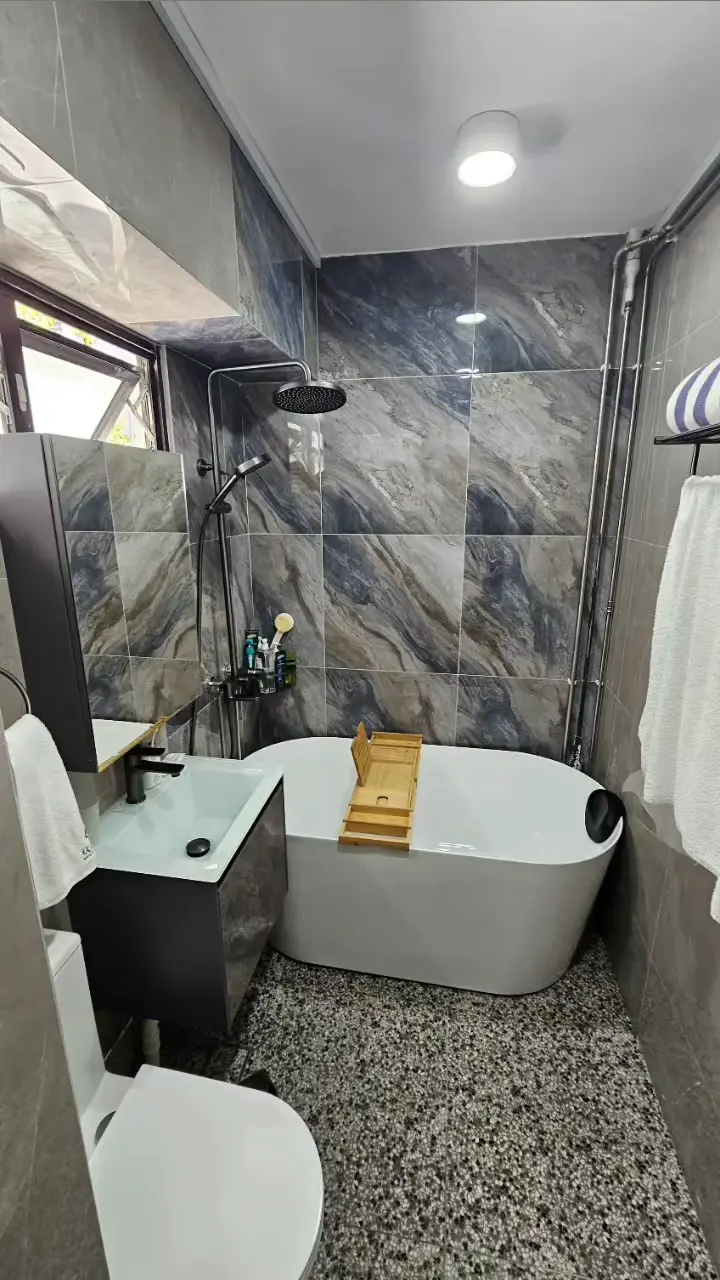
Which bathtub material keeps you warm
Two things decide how warm a bath feels: how cold the tub is when you step in, and how fast the water cools. Material matters most for the first.
Hot water supply matters more than material in most flats. Water per soak and what to ask your heater supplier are in how much a bathtub costs in Singapore.
How long each bathtub material lasts
Every material here can last many years. What ends a tub's life early is nearly always the same few things, and most are in your hands.
| Material | What usually goes wrong | How to prevent it |
|---|---|---|
| Acrylic | Fine scratches, dull patches, creaking | Water and body shampoo only, keep the legs level, no heavy objects dropped in |
| Stone resin | Stains on a matte finish, chips on the rim | Rinse after use; follow the maker's care guide |
| Cast iron | Enamel chips from dropped items | No hard objects in the tub; touch up chips quickly |
| Enamelled steel | Chips, then rust at the chip | Same as cast iron; seal any chip early |
| Wood | Mould, cracks if it dries out unevenly | Dry after use, keep air moving, follow the maker's oiling routine |
| Foldable plastic | Splits and leaks at folds and seams | Store dry and flat; expect to replace it |
From our install and after-sales team for acrylic. For the other materials, the comparison describes how each is commonly known to wear, not tested lifespans.
Acrylic: yellowing, flexing and cracks
Day-to-day care for every surface, from stains to the gap under the tub, is in how to clean and care for a bathtub.
Health, microplastics and moving house
Health and microplastics. More people are searching for this. We have not found research we could cite either way on bathtubs, so we do not make health claims for or against any material.
What we do know is how to keep acrylic in good condition: gentle cleaning, no abrasives, no strong chemicals.
Acrylic tubs in real homes
These are real installs, photographed by our team. Each one is acrylic, carried in by two people and set on the existing floor tiles.
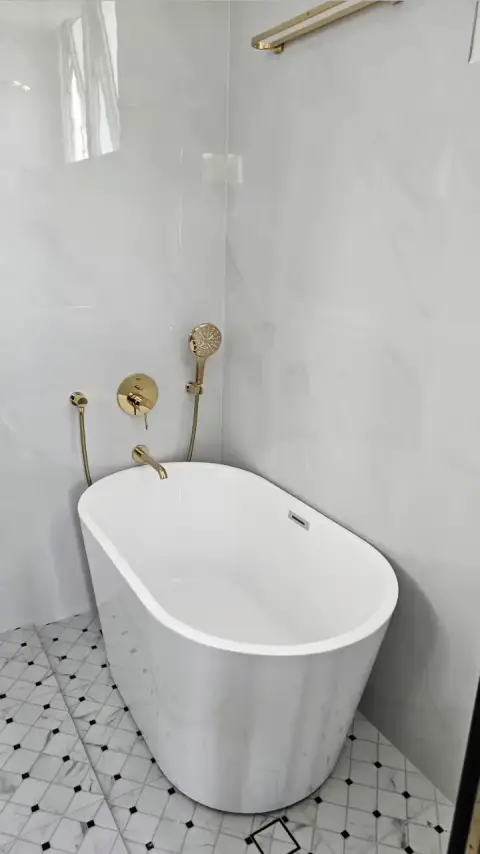 HERA 1005Apartment · Marine Parade
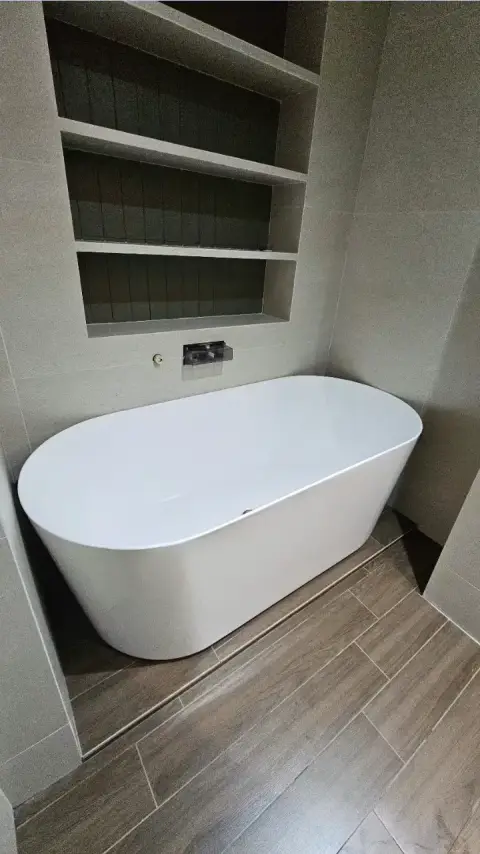 HERA 1025HDB · Tampines
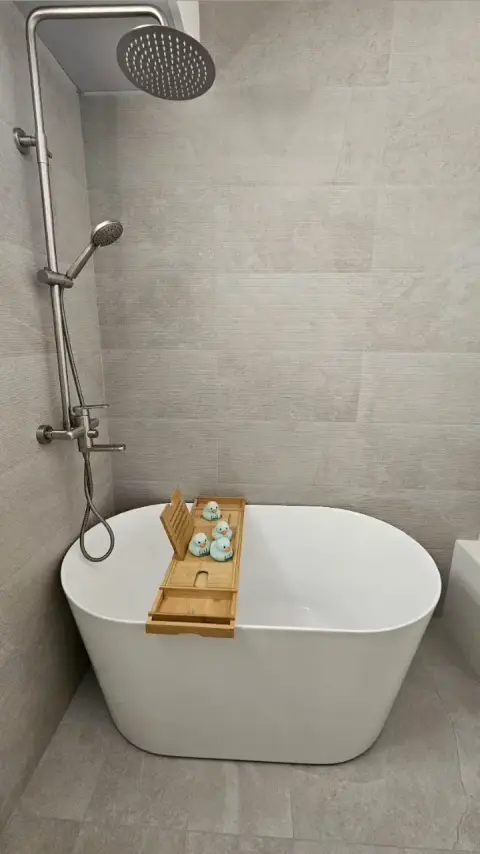 HERA 1025HDB · Bedok
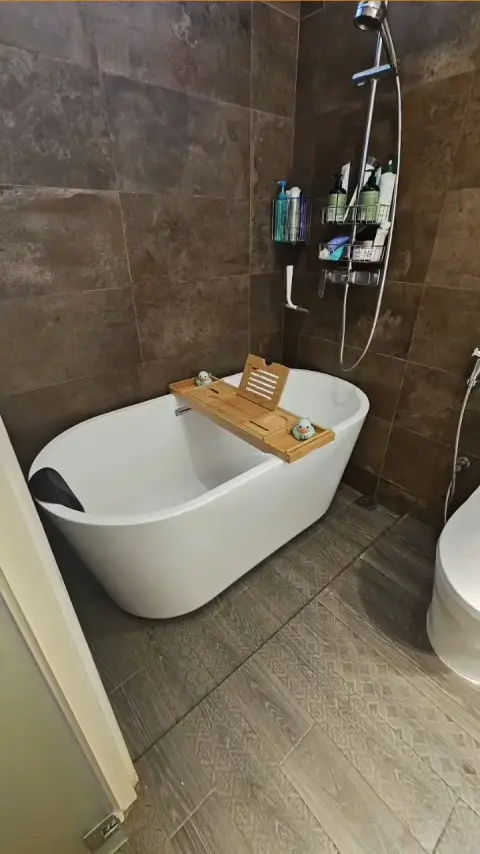 HERA 1005HDB · Bukit Panjang
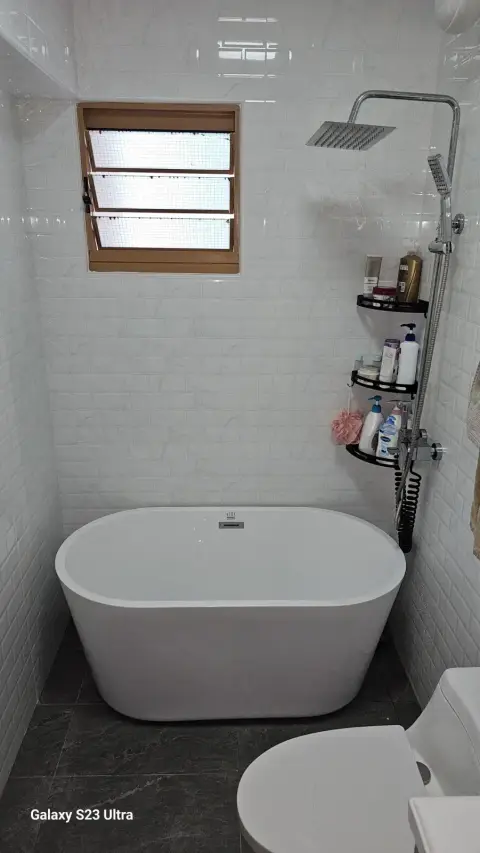 HERA 1005HDB · Sengkang
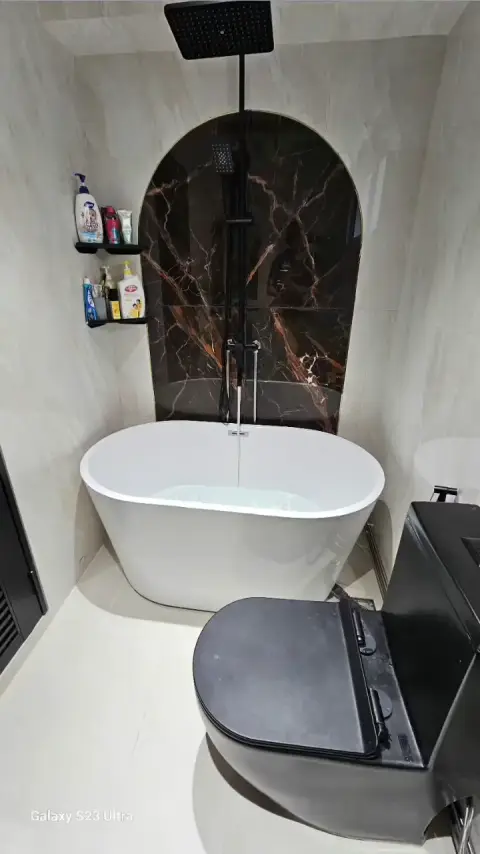 HERA 1005HDB · Woodlands
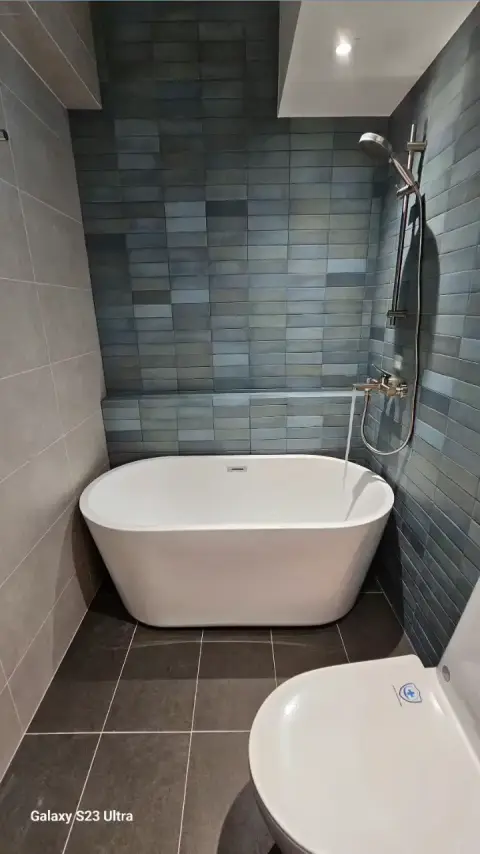 HERA 1005HDB · BTO · Tampines
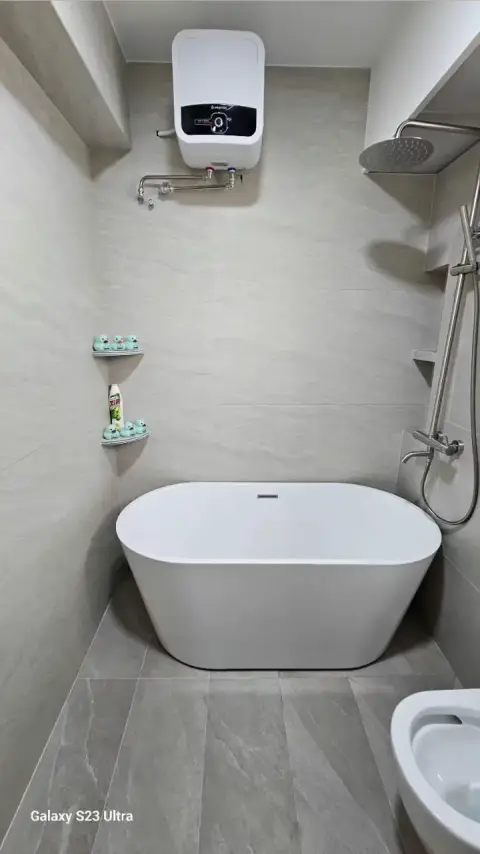 HERA 1005HDB · Bukit Batok
More than 250 bathtub jobs are on our Fitted Homes pages. For the full buying picture, from measuring to installation, start at the bathtub buying guide.
Bathtub material questions
What is the best bathtub material?
For most Singapore flats, acrylic. It is light enough for two people to carry through a lift and a bathroom door, warm to the touch, and easy to clean.
Stone resin and cast iron feel more solid, but they weigh roughly three times as much and cost more to buy and to move in.
Is a resin or acrylic tub better?
Acrylic, for most homes here. A 1,700mm stone resin or solid surface tub weighs about 104 to 140kg empty on makers' spec sheets; our 1,700mm acrylic tubs weigh 38 to 45kg.
Pick stone resin only if you love the matte, heavy feel and your delivery route and budget can take it.
What kind of bathtub lasts the longest?
No material outlasts the rest on its own: any well-made tub lasts many years if it sits level and is cleaned gently.
What shortens a tub's life is abrasive cleaning, knocks from heavy objects, and a base that lets it flex.
How long does an acrylic bathtub last?
Many years with gentle care. Clean it with water and body shampoo only, keep the legs level, and do not drop heavy things into it.
Our tubs carry a 1-year warranty against manufacturing faults. Claims go through WhatsApp with photos (a short video helps) and your order number.
Do acrylic bathtubs turn yellow?
They can look yellow or dull, but the usual cause is a film of soap and body oils that washes off. Bleach and scouring pads damage the surface, which is why we tell every customer to use water and body shampoo only.
If your tub has a stain you cannot shift, send us a photo before you try anything stronger.
Why does an acrylic bathtub creak or flex?
Usually because it is not sitting evenly on all its legs. Our tubs have a fibreglass layer and a stainless steel frame with adjustable legs, and our installer levels them on the day.
If a HERA tub starts to creak, WhatsApp us a short video and we will check the levelling first.
Can a scratched or cracked bathtub be repaired?
For a scratch on acrylic, send us a photo and we will tell you what can be done. Chips in enamel on steel or cast iron need a specialist touch-up, and a chip left open on steel can rust.
A crack is a different matter for any material. Send us photos and we will tell you if it is worth fixing.
Can you paint an acrylic bathtub?
We do not recommend it: we do not paint or recoat tubs, and our warranty covers manufacturing faults only.
If the surface bothers you, send us a photo first and check with us before you try anything.
Is acrylic safe? What about microplastics?
We have not found research we could cite either way on acrylic tubs and health or microplastics, so we do not make claims for or against any material.
What we can tell you is how to look after it: water and body shampoo, no abrasives, no strong chemicals.
Do you sell stone resin, solid surface or cast iron tubs?
No. Every HERA tub is acrylic with a fibreglass layer, on a stainless steel frame with adjustable legs. We chose it because it suits lift deliveries and finished HDB bathrooms.