

What if your kitchen sink was more than a utility? Imagine it as a silent anchor of your home’s restorative flow, a place where daily rituals become moments of serenity. Choosing between a stainless steel vs granite kitchen sink often feels like a choice between two distinct souls. You want a space that feels curated and calm, yet you're likely tired of the constant battle with water spots on steel or the lingering fear of a granite basin cracking. Technical jargon like 304 grade or composite resins often obscures the simple desire for enduring quality.
We believe high end luxury should center on your personal well being. This guide helps you discover the perfect balance of luxury and utility for your modern home. We'll compare these two iconic materials, focusing on how they complement a minimalist aesthetic and offer easy maintenance. From the 80% natural quartz durability found in granite composites to the polished resilience of steel, you'll find the clarity needed to create a kitchen that looks pristine for years. Let's explore how these surfaces can transform your kitchen into a private wellness retreat.
Key Takeaways
- Understand how your choice of material serves as the restorative anchor for your kitchen's visual and sensory rhythm.
- Explore the enduring brilliance of 304-grade stainless steel, a material celebrated for its hygienic properties and modern, light-reflective finish.
- Discover the tactile luxury of granite composite, which brings the grounded textures of natural elements and acoustic serenity to your home.
- Compare the life-cycle durability and daily maintenance rituals of a stainless steel vs granite kitchen sink to find your perfect aesthetic balance.
- Learn to integrate curated sink selections into compact Singaporean layouts to achieve a seamless, high-end functional flow.
The Soul of the Kitchen: Why Your Sink Material Matters
The kitchen is no longer just a space for food preparation. It has evolved into a restorative zone, a private sanctuary where the day’s rituals unfold with a gentle rhythm. At the center of this experience lies the sink. It's the silent anchor of your culinary life. Whether you're rinsing fresh herbs or enjoying the quiet flow of water after a long day, the material you touch and see dictates the emotional temperature of the room. A well chosen sink grounds the space, providing a sense of permanence and tranquility in an increasingly fast paced world.
As we look toward 2026, design trends are moving away from the cold, industrial aesthetics of the past. We're seeing a profound shift toward Japandi and biophilic design. These styles prioritize natural elements and a minimalist, uncluttered feel. Homeowners now seek warm minimalism, opting for earthy neutrals like taupe and sand that soothe the senses. Your choice between a stainless steel vs granite kitchen sink will define this visual harmony. It's the difference between the crisp, light-reflecting brilliance of modern metal and the grounded, tactile luxury of stone.
The Sink as a Design Anchor
A truly sophisticated kitchen balances the fluidity of moving water with the solid, unyielding geometry of its fixtures. The sink is the primary design statement that bridges these elements. It's the foundation that influences your choice of kitchen mixers and surrounding surfaces. In modern homes, the sink has transitioned from a hidden utility fixture to a curated centerpiece. Selecting the right vessel from a collection of kitchen sinks is the first step toward creating a space that feels both bespoke and functional. It's about the way light hits a polished edge or how a matte surface absorbs sound, contributing to a serene atmosphere.
A Baseline for Comparison
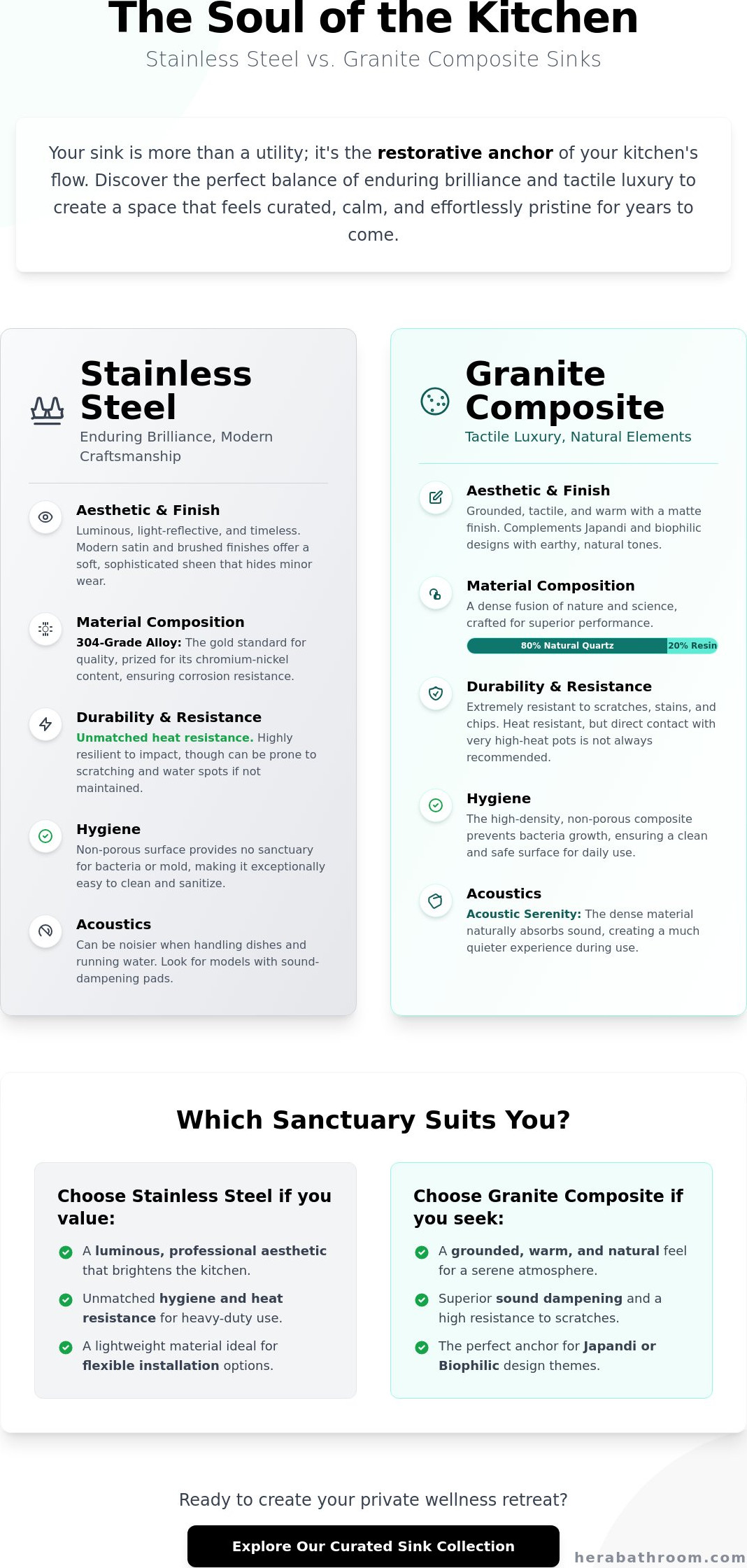
To make an informed decision, one must understand the craftsmanship behind the contenders. Classic stainless steel is defined by its 304-grade composition. This high quality alloy is prized for its hygienic properties and timeless, industrial elegance. On the other hand, granite composite represents a modern fusion of nature and science. These sinks are typically crafted from approximately 80% natural quartz mixed with high performance acrylic resins. This combination creates a surface that is incredibly dense and resistant to the rigors of daily life. Understanding the technical nuances of different sink materials allows for a choice that transcends temporary fashion. The debate of stainless steel vs granite kitchen sink is not merely about cost; it's about the tactile experience and the enduring beauty of your restorative retreat.
Stainless Steel: The Enduring Brilliance of Modern Craftsmanship
The kitchen is a place of light and reflection. Stainless steel captures this essence perfectly. While some perceive it as purely industrial, modern craftsmanship has elevated it to a design statement. It offers a timeless radiance that anchors the culinary space. A brushed or polished finish doesn't just look clean. It feels intentional. It creates a luminous backdrop for your daily rituals. Modern finishes have moved far beyond the utilitarian looks of the past. Satin and brushed textures hide minor wear while maintaining a soft, sophisticated sheen. This refined glow softens the kitchen’s geometry. It invites touch. It suggests a space that is lived in yet impeccably curated.
In the debate of stainless steel vs granite kitchen sink, steel often wins on pure versatility. It’s a lightweight material that offers flexible installation. Whether you prefer an undermount for a seamless look or a classic top-mount, steel adapts. It doesn't demand the heavy structural support that stone might. This makes it an ideal choice for Singaporean HDB and BTO renovations where space and weight are key considerations. The 304-grade alloy remains the gold standard for hygiene. It’s a non-negotiable for those who value health as much as style. Bacteria and mold find no sanctuary on its smooth surface. This creates a kitchen environment that feels genuinely restorative. It’s a foundation for wellness.
The Resilience of the Material
Durability meets effortless grace here. You can place a steaming pot directly into the basin without hesitation. Steel’s heat resistance is unmatched. According to an expert comparison of sink materials, this resilience makes it a practical choice for high-traffic kitchens. Its non-porous nature ensures food safety is never a compromise. Modern innovations like PVD (Physical Vapour Deposition) coatings now offer a layer of bespoke luxury. These finishes provide deep, saturated colors like champagne gold or gunmetal while enhancing scratch resistance. A marriage of strength and aesthetic fluidity.
Aesthetic Versatility
Steel is a design chameleon. It complements the clean lines of a Scandi kitchen or the raw textures of a minimalist loft. Because it’s color-neutral, it pairs seamlessly with any countertop material. This versatility ensures your kitchen remains timeless as trends evolve. To complete the restorative flow of your space, consider pairing your sink with elegant sink mixers. The right tapware transforms a functional area into a sophisticated retreat. If you’re refining your vision, exploring a curated collection of kitchen sinks is a wonderful place to start. Each piece is selected to bring harmony to your private sanctuary.
Granite Composite: The Tactile Luxury of Natural Elements
While steel reflects the light of a kitchen, granite composite absorbs it. It offers a sophisticated, matte aesthetic that brings the grounded textures of the natural world indoors. This material choice is a departure from the clinical. It's an invitation to a more sensory, organic experience. In a wellness-focused kitchen, the emotional impact of a grounded material is profound. It provides a sense of permanence and stability. It's a piece of the earth, refined for the modern home. For those curating a restorative environment, the choice of a granite kitchen sink creates a focal point that feels both ancient and contemporary.
One of the most transformative benefits of this material is its acoustic profile. Running water can often sound harsh against metallic surfaces. Granite composite naturally dampens the sound of splashing water and clattering cutlery. It facilitates a quieter, more serene culinary environment. This acoustic serenity is essential for open-concept living in Singapore, where the kitchen often flows into the living sanctuary. When evaluating a stainless steel vs granite kitchen sink, the silence of stone is a luxury that's felt rather than just seen. It contributes to a home that feels truly peaceful.
Durability is woven into the very fabric of the material. These sinks are typically composed of 80% natural quartz, the hardest constituent of granite. This high density provides unmatched scratch and dent resistance. While steel might show the history of every slipped knife, granite composite maintains a pristine, long-term look. It handles the rigors of a busy household with quiet confidence. It's a material that doesn't just survive daily life; it remains beautiful through it.
Crafting a Sensory Experience
The tactile quality of granite composite is unique. It possesses a natural warmth that feels organic to the touch. It lacks the sharp, cold sensation of metal. This makes the simple act of washing vegetables a more pleasant, mindful ritual. The high-density stone and resin blend also offers incredible impact resistance. You can handle heavy cast iron cookware without the fear of chipping the surface. Perhaps most importantly for busy homeowners, the matte finish eliminates the frustration of visible water spots. It stays looking clean and composed with minimal intervention. It's a surface designed for ease and elegance.
Colour as a Design Tool
Designers use the vast palette of granite to evoke specific moods. You can explore tones ranging from deep volcanic blacks to serene sandy beiges and taupes. These earthy neutrals are the cornerstone of the warm minimalism trend defining 2026 interiors. By selecting a shade that matches your countertop, you create a monolithic effect. This seamless, integrated look is a hallmark of high-end, bespoke design. UV resistance ensures that these colors maintain their depth and richness even when exposed to Singapore's bright tropical light. Your sanctuary will maintain its visual harmony for years to come. When you weigh the options of a stainless steel vs granite kitchen sink, consider how these natural hues can anchor your kitchen's soul.
Comparative Harmony: Durability, Maintenance, and Sensory Appeal
Every choice in your home is a balance of aesthetics and the practicalities of daily life. When deciding on a stainless steel vs granite kitchen sink, you’re choosing the sensory backdrop of your restorative rituals. One material offers a light-reflective energy. The other provides a grounded, muted presence. Both are designed to endure, but they interact with your environment in fundamentally different ways. Understanding these nuances ensures your kitchen remains a place of tranquility rather than a source of hidden chores.
Life-cycle durability is a hallmark of both materials. Steel is celebrated for its resilience against thermal shock, easily handling boiling water followed by an ice-cold rinse. Granite composite is equally robust, boasting high-density resistance to the dents and dings of heavy cookware. The true difference lies in how they age. A high-quality sink is a long-term investment in your sanctuary’s flow. While the initial cost may vary, the value is found in the years of pristine beauty and functional ease they provide to your private retreat.
The Maintenance Reality
Maintenance is a quiet ritual that preserves the soul of your kitchen. Stainless steel develops a patina of fine scratches over time, a characteristic that softens its industrial edge into a lived-in, silvered glow. To maintain its brilliance, a simple wipe with a soft cloth and mild soap is often enough. For granite composite, the challenge is different. It requires specific care to avoid white hazing, a cloudy film caused by mineral deposits from hard water. You can maintain the deep luster of both materials using eco-friendly solutions like a gentle mixture of white vinegar and water. This mindful approach keeps your surfaces hygienic without harsh chemicals.
Acoustics and Everyday Use
The soundtrack of your home matters. The clatter of cutlery against a steel basin is bright and resonant, fitting for a kitchen filled with culinary energy. In contrast, granite composite responds with a heavy, satisfying thud. It naturally absorbs vibration, dampening the sound of running water. For homeowners in open-concept BTO flats, this acoustic difference can be the key to maintaining a peaceful atmosphere in the adjacent living areas. Weight is also a vital consideration for under-mount installations. Because granite is significantly heavier, it requires sturdy cabinetry support to ensure a seamless and secure fit within your kitchen’s geometry.
Finding the right material is about aligning with your personal rhythm. Whether you prefer the timeless brilliance of metal or the tactile luxury of stone, your sink should enhance your sense of well-being. Explore our curated kitchen sink collection to find the piece that completes your vision of a modern, harmonious home.
Designing Your Private Sanctuary: HERA’s Curated Selection for Singapore Homes
Your kitchen is a sanctuary in the heart of the city. In Singapore’s unique urban landscape, every square inch of your HDB or BTO flat should serve your well-being. The choice between a stainless steel vs granite kitchen sink is more than a material preference. It’s a strategic decision that shapes the fluidity of your daily life. A well-designed kitchen fosters a sense of calm. It turns necessary chores into restorative rituals. By selecting a sink that harmonizes with your space, you create an environment that feels both expansive and intimate. It’s about finding the perfect equilibrium between timeless beauty and refined utility.
Integrating your chosen vessel with HERA’s kitchen sink cabinets ensures a seamless visual rhythm. These pieces are crafted to hide the complexities of plumbing, leaving only clean lines and solid geometry. When your kitchen mirrors the serenity of a private wellness retreat, the entire home feels more balanced. High-quality fittings are the final touch. They act as the jewelry of the room, providing a tactile connection to the water’s flow. Every element should be a deliberate choice in your journey toward a more mindful way of living.
Tailoring for the Singaporean Home
Space is a luxury in compact Singaporean layouts. To maximize your counter area, consider a single large bowl over a traditional double configuration. This choice offers the depth needed for larger cookware while maintaining a minimalist footprint. Under-mount sinks are often the preferred choice for those seeking a clean, uncluttered aesthetic. They allow for a smooth transition from countertop to basin, making maintenance effortless. Consider how Singapore’s bright tropical light interacts with your surfaces. Steel will bounce light around a smaller kitchen, making it feel airy. Granite composite will absorb the glare, providing a soft, grounded atmosphere that feels deeply restorative.
The HERA Experience
Our philosophy is rooted in functional elegance and bespoke craftsmanship. We believe that high-end luxury should be attainable and centered on your personal comfort. To truly understand the tactile differences of a stainless steel vs granite kitchen sink, we invite you to visit our Concept Store. Feeling the warmth of the stone or the smooth resilience of the steel is a sensory experience that digital guides cannot replicate. You can also explore our Brochure Gallery for design inspiration that speaks to your unique aesthetic. Your definitive choice should be guided by your lifestyle and your vision of a harmonious home.
Final Selection Checklist:
- Aesthetic Energy: Do you prefer a luminous, reflective glow or a grounded, matte texture?
- Acoustic Rhythm: Is a quiet, dampened environment essential for your open-concept living?
- Spatial Harmony: Does a single large bowl better serve your minimalist counter space?
- Maintenance Rituals: Are you comfortable with the natural patina of steel or the specific care required for granite?
Creating Your Restorative Culinary Anchor
Your kitchen sink is the foundation of your home’s daily restoration. Throughout this guide, we've explored how material choice dictates the visual and acoustic rhythm of your space. Whether you choose the timeless brilliance of 304-grade stainless steel or the grounded, tactile luxury of granite composite, your decision should align with your personal sense of serenity. Remember that durability and maintenance are the quiet rituals that preserve this beauty for years to come. Designing for compact Singapore spaces requires a delicate balance of form and function.
Our collection features high-grade 304 stainless steel and premium composites specifically curated for modern HDB and BTO layouts. Choosing between a stainless steel vs granite kitchen sink becomes an effortless experience when you focus on the emotional impact of the surface. You can experience these materials firsthand at our MacPherson Concept Store to find the perfect fit for your sanctuary. Explore HERA’s Curated Collection of Kitchen Sinks and begin crafting your private retreat. Your journey toward a more beautiful, mindful living space starts with a single, thoughtful choice.
Frequently Asked Questions
Does stainless steel scratch more easily than granite composite?
Stainless steel is more prone to surface abrasions than granite composite. The natural density of quartz makes granite exceptionally resistant to scratches from daily cutlery. While steel develops a soft patina over time, granite retains its unmarred, matte elegance. This grounded texture is perfect for those who value an enduringly pristine aesthetic in their restorative kitchen zone.
Will a granite sink crack if I drop a heavy pot in it?
Cracking is extremely rare due to the high quartz content in composite sinks. These vessels are engineered to withstand the impact of heavy cookware and thermal shock. While they are nearly indestructible, dropping a heavy cast iron pot from a height could potentially cause a chip. A mindful approach to your culinary rituals ensures the stone remains a solid anchor in your home.
Which sink material is better for hard water areas in Singapore?
Stainless steel often proves more practical for managing mineral buildup from hard water. Darker granite sinks can show a white haze if water is allowed to evaporate on the surface. To maintain the serenity of either material, simply wipe the basin dry after use. This prevents deposits from clouding the beautiful geometry of your sink’s finish.
Is it harder to install a granite sink in an HDB flat due to the weight?
Granite sinks require reinforced cabinetry but are a sophisticated choice for any HDB kitchen. Because they are heavier than metallic options, your support structure must be robust. When evaluating a stainless steel vs granite kitchen sink for your Singapore home, consult with a professional to ensure the weight is properly distributed. This ensures a seamless, secure fit for your private retreat.
Can I use harsh chemicals like bleach to clean a granite composite sink?
Avoid bleach and abrasive scouring pads to protect the composite resins. Harsh chemicals can degrade the surface and lead to a dull, weathered appearance. We recommend mild soap and a soft cloth to preserve the tactile luxury of the material. A gentle touch keeps your sanctuary feeling fresh and vibrant without the need for aggressive cleaning agents.
Why is 304 stainless steel recommended over 201 for kitchen sinks?
Grade 304 offers the highest level of corrosion resistance and hygiene for modern homes. It contains more nickel and chromium than grade 201, which is more susceptible to rust in Singapore’s humid climate. Choosing high-grade steel is a commitment to quality and wellness. It ensures your kitchen remains a clean, luminous environment for years to come.
How do I prevent water spots from showing on my stainless steel sink?
Preventing water spots is as simple as drying the basin with a soft cloth after use. This prevents minerals from settling on the surface as the water evaporates. Regular maintenance keeps the steel’s modern glow alive. For an extra layer of luxury, a light polish once a month restores the light-reflective energy that defines a well-curated culinary space.
Do granite sinks stain if I leave coffee or wine in them overnight?
Granite composite is non-porous and resists staining, though we suggest rinsing away dark liquids promptly. Leaving wine or coffee overnight can occasionally leave surface marks that require a deeper clean. In the ongoing comparison of a stainless steel vs granite kitchen sink, granite’s ability to resist deep stains makes it an excellent partner for a busy, wellness-focused lifestyle. It maintains its deep, saturated color with minimal effort.